


Vetiveryl Acetate ex Haiti 5D 1T
Sweet, Fresh, Woody, Vetiver, Dry, Smooth, Exalting, Tenacious, Fixative
Supplied as 5% in DPG.
About this material
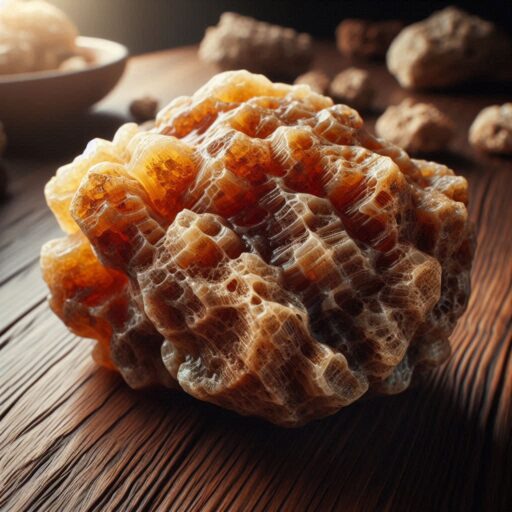
Vetiveryl Acetate ex Haiti
Vetiveryl Acetate ex Haiti is a refined ester obtained via acetylation of natural vetiver oil; specifically, oil sourced from Haiti, which is prized for its floral‑woody balance.
Haitian oil is commonly regarded as one of the best quality sources available and this oil makes no exception.
Scent character
Highlights from the material’s listed odour profile.
Note position
Base note
Material character
A closer lookOdour strength
Listed qualitative strength
Tenacity / substantivity
357 hour(s)
at 100%
Listed reference conditions
Supplied strength is 5% in DPG.
Fragrance development
Base note
Illustrative note development · no measured evaporation data
Molecular identity
Fragrance allergen reference
Generic regulatory reference only. This is not a supplier allergen declaration, measured composition, allergen-free claim or finished-product labelling assessment.
Raw undiluted material reference. These data refer to the named active material, not the complete supplied dilution. A raw-material IFRA ceiling is not a use level for this diluted product. The assessor must account for the actual concentration, carrier and all other formula contributions.
European Union / Northern Ireland
No direct listed-entry CAS match in this jurisdiction’s held reference set. This does not mean the material is allergen-free. Constituents, grouped entries and natural-material composition may require further review.
Finished-cosmetic declaration thresholds: greater than 0.001% leave-on; greater than 0.01% rinse-off. Apply the current target-market rules to the actual complete formulation; no concentration is inferred here.
Commission Regulation (EU) 2023/1545 · Regulation (EU) 2023/1545 with 11 November 2025 corrigendum; checked 2026-10-26.
Held EU transition dates: placing noncompliant products on the market until 2026-07-31; making them available until 2028-07-31. Check applicability and current law for the intended market. 2025 corrigendum.
Great Britain
No direct listed-entry CAS match in this jurisdiction’s held reference set. This does not mean the material is allergen-free. Constituents, grouped entries and natural-material composition may require further review.
Finished-cosmetic declaration thresholds: greater than 0.001% leave-on; greater than 0.01% rinse-off. Apply the current target-market rules to the actual complete formulation; no concentration is inferred here.
Regulation (EC) No 1223/2009, Annex III (Great Britain) · legislation.gov.uk current text checked 2026-10-26.
Current supplier composition or allergen declarations are required to assess naturals, bases, mixtures and actual concentrations. Reference data checked 2026-10-26; bundle 2026-10-27. Supplementary private documents remain separate.
Product specification
| CAS number | 84082-84-8 |
|---|---|
| Odour description (decreasing) | Sweet, Fresh, Woody, Vetiver, Dry, Smooth, Exalting, Tenacious, Fixative |
| Odour strength | Medium |
| Perfumery use | Effective from the smallest traces through to 0.90%Listed perfumery guidance; this is not an IFRA limit. |
| Substantivity | 357 hour(s) at 100% |
| Solvent | DPG to give a 5% solution of Vetiveryl Acetate ex Haiti |
| Physical state | Liquid |
| Synonyms | vetiveria zizanioides root extract acetylated, acetylated extract obtained from the roots of the vetivert, vetiveria zizanioides, poaceae |
| Recorded name / preparation | Vetiveryl Acetate |
| IFRA document scope | Where an IFRA document is shared with the raw material, it refers to the raw, undiluted material. It is supplied as a reference for this diluted product; its stated limits are not limits for the supplied dilution. Check the document scope and assess the intended finished formulation. This notice does not confirm that a document is available. |
Additional listed details
Additive: 1% Stab Toco
Safety & handling
Hazard statements:
- H317 May cause an allergic skin reaction.
- H411 Toxic to aquatic life with long lasting effects.
Precautionary statements:
- P261 Avoid breathing vapour or dust.
- P272 Contaminated work clothing should not be allowed out of the workplace.
- P273 Avoid release to the environment.
- P280 Wear protective gloves/eye protection/face protection.
- P302+P352 IF ON SKIN: Wash with plenty of soap and water.
- P501 Dispose of contents/container to approved disposal site, in accordance with local regulations.
Professional/Industrial use only.
Datasheets & customer documents
Available documents are attached to eligible completed orders in your account.
Sign in to view your ordersMy account → Orders
Supplementary documents are supplied only where explicitly listed and available. Check documentation information
Purchased as a guest? Follow the SDS request guidance in our Documentation Supply Policy and provide proof of purchase.
Documentation Supply PolicyIFRA formulation guide
Generic reference only — not an IFRA certificate, compliance decision or use recommendation. The Responsible Person and qualified safety assessor must assess the actual finished formula using current applicable IFRA Standards, supplementary documentation where available and the CPSR.
Raw undiluted material reference. These data refer to the named active material, not the complete supplied dilution. A raw-material IFRA ceiling is not a use level for this diluted product. The assessor must account for the actual concentration, carrier and all other formula contributions.
Source: 51st Amendment overview, held source checked 2026-10-21. Bundle 2026-10-27. Individual Standards prevail over the overview.
Acetylated Vetiver oil
RESTRICTION · CAS 62563-80-8, 68917-34-0, 73246-97-6, 84082-84-8
Category 4 — fine fragrance: 0.9% in the finished consumer product
All applicable specification, purity and other Standard conditions must also be met.
All IFRA categories and Standard conditions
| Category 1 | 0.05% in the finished consumer product |
|---|---|
| Category 2 | 0.05% in the finished consumer product |
| Category 3 | 0.05% in the finished consumer product |
| Category 4 | 0.9% in the finished consumer product |
| Category 5A | 0.1% in the finished consumer product |
| Category 5B | 0.1% in the finished consumer product |
| Category 5C | 0.1% in the finished consumer product |
| Category 5D | 0.033% in the finished consumer product |
| Category 6 | 0.098% in the finished consumer product |
| Category 7A | 0.1% in the finished consumer product |
| Category 7B | 0.1% in the finished consumer product |
| Category 8 | 0.033% in the finished consumer product |
| Category 9 | 0.2% in the finished consumer product |
| Category 10A | 0.2% in the finished consumer product |
| Category 10B | 3.8% in the finished consumer product |
| Category 11A | 0.033% in the finished consumer product |
| Category 11B | 0.033% in the finished consumer product |
| Category 12 | No numeric restriction in this overview cell; review the full Standard and other applicable requirements. |
CAS numbers (comment): The scope of this Standard includes, but is not limited to the CAS number(s) indicated above; any other CAS number(s) used to identify this fragrance ingredient should be considered in scope as well.
Contributions from other sources: None to consider
Flavor use consideration: Due to the possible ingestion of small amounts of fragrance ingredients from their use in products in Categories 1 and 6, materials must not only comply with IFRA Standards but must also be recognized as safe as a flavoring ingredient as defined by the IOFI Code of Practice (www.iofi.org). For more details see chapter 1 of the Guidance for the use of IFRA Standards.
IFRA Standard type: RESTRICTION
Intrinsic property driving the risk management measure: DERMAL SENSITIZATION AND SYSTEMIC TOXICITY
Amendment revised: 49
Existing creations deadline: February 10, 2022
New creations deadline: February 10, 2021
IFRA source overview · Individual IFRA Standards and supplementary documentation
Supplier certificates and private documents are separate evidence. Their availability does not determine whether this generic guide is shown. This is a dated local reference, not a live regulatory feed.
Creative ideas to explore
Creative directions, not tested formulas.Woods in daylight
With bergamot and a crisp citrus openingExplore a spare wood structure with citrus providing the opening contrast. Compare a brighter version with the wood reference and follow how the outline changes, keeping the later impression as important as the first moment.
A softer grain
With sandalwood and a musk directionSet the woody material beside a softer wood reference, then compare a restrained musk variation. Decide whether your concept needs creamy texture, dry definition or more space between its parts before expanding the accord.
Petals on timber
With rose and a clear floral accordTry a flower-and-wood study in which both subjects remain recognisable. Compare the floral reference with the woody variation through the evaluation, noting whether the wood forms a useful backdrop or becomes the centre of the idea.


Reviews
There are no reviews yet