


Odour strength
Medium
Listed qualitative strength

Price range: £4.24 through £59.49
Odour description (decreasing) Fruity, Woody, Green Apple, Herbal
Ortho Tertiary Butyl Cyclohexyl Acetate (O.T.B.C.H.A)
Intense and robust, this powerful fragrance material combines the invigorating essence of fruits and florals with a subtle woody undertone.
It’s unique potency effortlessly harmonises with floral compositions, imparting a delightful fruity tea aroma.
A sophisticated and complex odour material.
Please note: This ingredient may solidify at cooler temperatures or during storage because of its natural chemical structure. Many aroma chemicals, esters, and ketones have a melting point near or above typical room temperature, so they can crystallise or become semi-solid when stored in cooler environments. This solidification is completely normal and does not affect the quality, fragrance, or performance of the product. Gently warming the material will return it to its liquid state, ready for use.
Highlights from the material’s listed odour profile.
Top note · Heart note
Listed qualitative strength
8 hour(s)
at 100%
Listed reference conditions
Top note · Heart note
Illustrative note development · no measured evaporation data
Generic regulatory reference only. This is not a supplier allergen declaration, measured composition, allergen-free claim or finished-product labelling assessment.
Raw-material reference based on recorded CAS numbers. A CAS match identifies a reference entry; it does not verify the supplied grade, composition, purity or finished-product compliance. Naturals, bases and mixtures require composition review.
No direct listed-entry CAS match in this jurisdiction’s held reference set. This does not mean the material is allergen-free. Constituents, grouped entries and natural-material composition may require further review.
Finished-cosmetic declaration thresholds: greater than 0.001% leave-on; greater than 0.01% rinse-off. Apply the current target-market rules to the actual complete formulation; no concentration is inferred here.
Commission Regulation (EU) 2023/1545 · Regulation (EU) 2023/1545 with 11 November 2025 corrigendum; checked 2026-10-26.
Held EU transition dates: placing noncompliant products on the market until 2026-07-31; making them available until 2028-07-31. Check applicability and current law for the intended market. 2025 corrigendum.
No direct listed-entry CAS match in this jurisdiction’s held reference set. This does not mean the material is allergen-free. Constituents, grouped entries and natural-material composition may require further review.
Finished-cosmetic declaration thresholds: greater than 0.001% leave-on; greater than 0.01% rinse-off. Apply the current target-market rules to the actual complete formulation; no concentration is inferred here.
Regulation (EC) No 1223/2009, Annex III (Great Britain) · legislation.gov.uk current text checked 2026-10-26.
Current supplier composition or allergen declarations are required to assess naturals, bases, mixtures and actual concentrations. Reference data checked 2026-10-26; bundle 2026-10-27. Supplementary private documents remain separate.
| CAS number | 20298-69-5 · 88-41-5 |
|---|---|
| Odour description | Fruity, Woody, Green Apple, Herbal · Fresh, Fruity, Woody, Herbal, Camphor, Spicy |
| Odour strength | Medium |
| Perfumery use | Effective from the smallest traces, through to 15%Listed perfumery guidance; this is not an IFRA limit. |
| Substantivity | 8 hour(s) at 100% |
| Solvent | None |
| Physical state | Liquid — May crystallise or become semi-solid in cool storage; gentle warming restores the working liquid state. |
| Synonyms | [(1R,2R)-2-tert-butylcyclohexyl] acetate, Agrumex HC, Ortho Tertiary Butyl Cyclohexyl Acetate, Cis-2-Tert-Butylcyclohexyl Acetate |
CAS No: 20298-69-5, 88-41-5

Signal word: None
Hazard statements:
Precautionary statements:
Professional/Industrial use only.
Available documents are attached to eligible completed orders in your account.
Sign in to view your ordersMy account → Orders
Supplementary documents are supplied only where explicitly listed and available. Check documentation information
Purchased as a guest? Follow the SDS request guidance in our Documentation Supply Policy and provide proof of purchase.
Documentation Supply PolicyGeneric reference only — not an IFRA certificate, compliance decision or use recommendation. The Responsible Person and qualified safety assessor must assess the actual finished formula using current applicable IFRA Standards, supplementary documentation where available and the CPSR.
Raw-material reference based on recorded CAS numbers. A CAS match identifies a reference entry; it does not verify the supplied grade, composition, purity or finished-product compliance. Naturals, bases and mixtures require composition review.
Source: 51st Amendment overview, held source checked 2026-10-21. Bundle 2026-10-27. Individual Standards prevail over the overview.
No direct IFRA overview entry matched the recorded CAS in this held dataset. This does not mean unrestricted use, absence of relevant Standards or compliance. Constituent restrictions may still apply.
IFRA source overview · Individual IFRA Standards and supplementary documentation
Supplier certificates and private documents are separate evidence. Their availability does not determine whether this generic guide is shown. This is a dated local reference, not a live regulatory feed.
Explore a fruit sketch that includes a suggestion of peel or leaf. Compare those accents separately against the fruity reference, noticing whether they create a fresher impression or pull the idea away from the fruit you imagined.
Place the fruity direction beside a simple floral accord. Keep a flower-only comparison and assess whether the fruit reads as a supporting accent, a juicy centre or a separate note that needs a different setting.
Sketch a more rounded fruit idea with vanilla as one variation and soft wood as another. Compare sweetness and texture before combining both, leaving room for the original fruity character to remain identifiable in the study.
| Volume | 10ml, 30ml, 100ml, 250ml, 500ml, 1l |
|---|
Concept illustration only; no dilution ratio or carrier is implied for this material. Refer to the product specification and label.
The suffix D forms part of the product name and indicates that the material is supplied as a dilution rather than at full strength.
POD = Precious Oil Dilution, typically intended for aromatherapy applications.
AOD = Absolute Oil Dilution, indicating that the product is supplied as a diluted absolute.
The dilution ratio and carrier/solvent are stated within the product specification and will also be shown on the product label.
IMPORTANT: Customers should always rely on the product specification when confirming the concentration and carrier/solvent supplied.
While we endeavour to ensure that product names and suffixes accurately reflect the material supplied, the product specification (including the stated dilution ratio and carrier/solvent) shall take precedence in the event of any omission, abbreviation, naming variation, or delayed update to a product title.
Please ensure you have selected the correct material, concentration, dilution ratio and carrier/solvent before completing your purchase.
For professional perfumery use only. Not for direct application to skin or ingestion. Keep out of reach of children.
Handle using the precautions specified for the material. Wear suitable protective gloves and eye protection where required.
Keep away from sources of ignition where applicable and avoid release to the environment.
Keep containers securely closed and store under the conditions specified on the product label and SDS. Keep liquid containers upright.
If swallowed or otherwise exposed, follow the SDS first-aid instructions and seek medical advice as appropriate. Do not induce vomiting unless directed by a medical professional.
Product-specific warnings, handling precautions and storage requirements take precedence over this general information.
A Safety Data Sheet (SDS) is available to logged in users who have purchased this item, where applicable.
Documents are not supplied before purchase.
Read the applicable SDS before handling or using the material. Follow its instructions for hazards, protective equipment, first aid, handling, storage and disposal.
An SDS provides information about the material supplied; it does not replace an assessment of the safety or compliance of a finished formulation.
Please note that supplementary documentation—including, but not limited to, IFRA Certificates, Certificates of Analysis (CoA), Allergen Declarations, and other regulatory or compositional data—may not be available for all products. Refer to the "Supplementary Documentation" tab to check current availability. If the tab is not present, no supplementary documents are available for the material.
Customers intending to use materials in cosmetic applications, including for the preparation of a Cosmetic Product Safety Report (CPSR) under UK and EU Cosmetics Regulations, must contact us prior to purchase to confirm the availability and suitability of any required documentation where it is not explicitly stated. Orders must not be placed in reliance on the assumption that such documentation will be provided where it is not explicitly stated on the relevant product page at the time of purchase.
By proceeding with a purchase without prior written confirmation, you acknowledge and accept that documentation beyond the legally required SDS may not be supplied, and you agree that Perfume Extract shall not be held liable for the absence of such documentation or for any inability to complete regulatory requirements, including CPSR or product compliance obligations.
Products are supplied in accordance with our Documentation Supply Policy
These limitations apply to reliance on all documentation supplied, including IFRA information, allergen declarations, Certificates of Analysis (CoAs), technical data sheets, specifications and other supporting documents.
Perfume Extract is solely a reseller of this product and is not an agent, official distributor, or affiliated in any way with the manufacturer.
Customers are responsible for determining whether the material and available documentation meet their requirements before purchase, and for assessing the safety and compliance of their finished products.
We do not provide formulation instructions, formulation consultancy or confirmation of suitability at a particular concentration or for a particular application.
Producer identity, detailed sourcing and processing information are not disclosed beyond the information published in the product listing.
Please read our Documentation Supply Policy alongside the product specification and available documentation.
Synonyms, alternative names, CAS/EC references, botanical names, manufacturer references and external links may describe a substance or material family generally. They should not, on their own, be taken as confirmation of the supplied material’s producer, geographical origin, manufacturing process, grade, purity, constituent levels or batch characteristics.
In particular, a synonym or reference must not be used to infer that a material is free from a particular constituent, meets a numerical specification, or is suitable for a particular application or concentration.
IFRA information, allergen declarations, Certificates of Analysis (CoAs), technical data sheets and other supporting documents apply only within their expressly stated scope. A general specification or reference document is not a batch-specific analytical result unless it expressly identifies the relevant batch.
If information appears inconsistent, or a particular characteristic is essential to your purchase, contact us for written clarification before ordering. Do not resolve discrepancies by assuming that a synonym, external reference or document for another grade applies to the material supplied.
We do not confirm characteristics beyond those expressly supported by the applicable product specification or our written confirmation. Customers remain responsible for assessing their complete formulation and intended application.
Nothing in this information excludes or restricts liability or statutory rights that cannot lawfully be excluded or restricted.

Perfumer's Alcohol

Low odour, high quality grade diluent.

Odour description (decreasing): Amber, Ambergris, Woody, Dry, Clean, Diffusive & Fixative
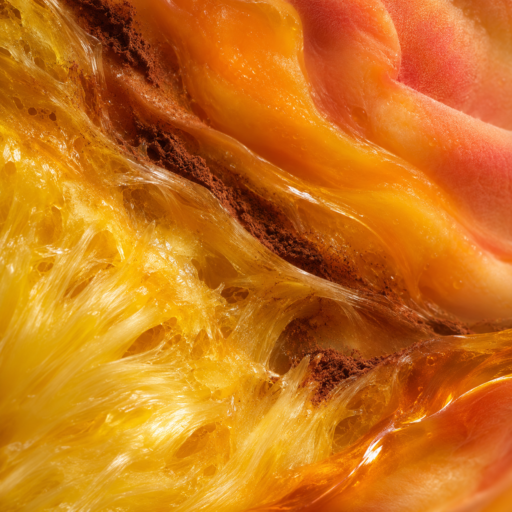
Odour description (decreasing): Fruity, Pineapple, Cocoa, Peach, Mango, Amber.

Odour description (decreasing): Floral, Rose, Waxy, Citrus

Odour description (decreasing): Sweet, Vanilla, Vanillin, Powdery, Chocolate, Powerful.

Odour description (decreasing): Sweet, Floral, Jasmine, Fruity, Fresh

Odour description (decreasing): Fruity, Green, Woody. Cedar, Pine, Liquorice, Anise, Ozonic, Incense like.

Odour description (decreasing): Sweet, Fruity, Ethereal, Buttery, Butterscotch

Odour description (decreasing): Intense Cedarwood, Warm Amber, Dry Woods, Powdery, Velvety, Balsamic, Radiant, Tenacious, Voluminous, Diffusive

Odour description (decreasing): Amber, Ambergris, Woody, Dry, Clean, Diffusive & Fixative

Odour description (decreasing): Sweet, Vanilla, Vanillin, Powdery, Chocolate, Powerful.



Reviews
There are no reviews yet