



Odour strength
Strong
Listed qualitative strength

Price range: £5.09 through £101.99
Odour description (decreasing) Peppery, Spicy, Warm, Dry Woody, Fresh Terpenic, Earthy, Citrus, Balsamic
Piper Nigrum Oil
Black Pepper Oil is an expressive natural essential oil with the vivid aroma of freshly crushed black peppercorns.
Dry, warm and immediately recognisable, it brings energy and textural contrast to perfume formulations without introducing the sweetness associated with many traditional spice materials.
The opening is bright and lively, presenting a crisp peppered freshness before moving into warmer, subtly woody and aromatic facets.
This combination allows Black Pepper Oil to connect fresh top notes with deeper woods, resins and amber materials, making it especially useful in fragrances that require both lift and structure.
Black pepper oil is widely characterised as warm, fresh and immediately peppery, with dry woody, terpenic and subtly earthy facets.
Its natural complexity gives spice accords brightness without the dense sweetness associated with clove-type materials.
The principal character is spicy, warm and peppery.
Beneath the initial peppercorn brightness lies a drier woody quality that gives the oil greater sophistication and persistence.
Its natural complexity can feel fresh, earthy and gently terpenic, depending on the surrounding materials and concentration used.
Black Pepper Oil can provide a recognisable spice accent at low levels or become a more prominent feature in bold aromatic and woody creations.
Black Pepper Oil works beautifully in modern woody perfumes, aromatic compositions, incense accords, amber structures and contemporary masculine or gender-neutral fragrances.
It can sharpen citrus openings, add tension to florals and introduce natural warmth to cedarwood, vetiver, patchouli and sandalwood compositions.
It is also valuable in leather, tobacco, resinous and smoky accords where its peppered dryness can prevent the composition from becoming overly heavy or sweet.
Consider Black Pepper Oil alongside bergamot, grapefruit, elemi, frankincense, cedarwood, vetiver, patchouli, labdanum, leather notes and dry amber materials.
It can also introduce an unexpected, sophisticated contrast to rose and other rich floral accords.
Highlights from the material’s listed odour profile.
Top note
Listed qualitative strength
48 Hour(s)
at 100%
Listed reference conditions
Top note
Illustrative note development · no measured evaporation data
Generic regulatory reference only. This is not a supplier allergen declaration, measured composition, allergen-free claim or finished-product labelling assessment.
Raw-material reference based on recorded CAS numbers. A CAS match identifies a reference entry; it does not verify the supplied grade, composition, purity or finished-product compliance. Naturals, bases and mixtures require composition review.
No direct listed-entry CAS match in this jurisdiction’s held reference set. This does not mean the material is allergen-free. Constituents, grouped entries and natural-material composition may require further review.
Finished-cosmetic declaration thresholds: greater than 0.001% leave-on; greater than 0.01% rinse-off. Apply the current target-market rules to the actual complete formulation; no concentration is inferred here.
Commission Regulation (EU) 2023/1545 · Regulation (EU) 2023/1545 with 11 November 2025 corrigendum; checked 2026-10-26.
Held EU transition dates: placing noncompliant products on the market until 2026-07-31; making them available until 2028-07-31. Check applicability and current law for the intended market. 2025 corrigendum.
No direct listed-entry CAS match in this jurisdiction’s held reference set. This does not mean the material is allergen-free. Constituents, grouped entries and natural-material composition may require further review.
Finished-cosmetic declaration thresholds: greater than 0.001% leave-on; greater than 0.01% rinse-off. Apply the current target-market rules to the actual complete formulation; no concentration is inferred here.
Regulation (EC) No 1223/2009, Annex III (Great Britain) · legislation.gov.uk current text checked 2026-10-26.
Current supplier composition or allergen declarations are required to assess naturals, bases, mixtures and actual concentrations. Reference data checked 2026-10-26; bundle 2026-10-27. Supplementary private documents remain separate.
| CAS number | 84929-41-9 |
|---|---|
| Odour description (decreasing) | Peppery, Spicy, Warm, Dry Woody, Fresh Terpenic, Earthy, Citrus, Balsamic |
| Odour strength | Strong |
| Perfumery use | A vivid natural spice note for adding peppery lift, warmth and dry aromatic energy to woody, amber, incense, leather, citrus, masculine, oriental and modern gourmand compositions. Particularly useful for sharpening an opening, introducing natural contrast to sweet accords and connecting fresh top notes with a warm woody base.Listed perfumery guidance; this is not an IFRA limit. |
| Typical use percentage | 0.1–2% of the fragrance concentrate |
| Substantivity | 48 Hour(s) at 100% |
| Solvent | None |
| Flash point | 46 °C |
| Physical state | Liquid |
| Physical form | Liquid |
| Synonyms | Black Pepper Essential Oil; Pepper Oil; Black Peppercorn Oil; Piper nigrum Fruit Oil; Piper nigrum Oil |
| Recorded name / preparation | Black Pepper Oil |




Signal word: Danger
Hazard statements:
Precautionary statements:
Important: For professional formulation use. Review the Safety Data Sheet before handling, storage or use.
Available documents are attached to eligible completed orders in your account.
Sign in to view your ordersMy account → Orders
Supplementary documents are supplied only where explicitly listed and available. Check documentation information
Purchased as a guest? Follow the SDS request guidance in our Documentation Supply Policy and provide proof of purchase.
Documentation Supply PolicyGeneric reference only — not an IFRA certificate, compliance decision or use recommendation. The Responsible Person and qualified safety assessor must assess the actual finished formula using current applicable IFRA Standards, supplementary documentation where available and the CPSR.
Raw-material reference based on recorded CAS numbers. A CAS match identifies a reference entry; it does not verify the supplied grade, composition, purity or finished-product compliance. Naturals, bases and mixtures require composition review.
Source: 51st Amendment overview, held source checked 2026-10-21. Bundle 2026-10-27. Individual Standards prevail over the overview.
No direct IFRA overview entry matched the recorded CAS in this held dataset. This does not mean unrestricted use, absence of relevant Standards or compliance. Constituent restrictions may still apply.
IFRA source overview · Individual IFRA Standards and supplementary documentation
Supplier certificates and private documents are separate evidence. Their availability does not determine whether this generic guide is shown. This is a dated local reference, not a live regulatory feed.
Explore a floral study with the spicy material as the changing accent. Compare it against the flower alone, deciding whether the contrast suggests warmth, brightness or a more pronounced spice character that deserves a different brief.
Sketch a brighter spice idea around citrus peel, then compare an herbal variation separately. Evaluate which setting makes the material’s listed character easiest to recognise and whether the opening still matches the composition you want to build.
Place the spice character against a simple wood backdrop and compare a warmer amber variation. Keep the wood-only reference close so you can judge the contribution of each change without mistaking a richer blend for a better one.
| Volume | 10ml, 30ml, 100ml, 250ml, 500ml, 1l |
|---|
Concept illustration only; no dilution ratio or carrier is implied for this material. Refer to the product specification and label.
The suffix D forms part of the product name and indicates that the material is supplied as a dilution rather than at full strength.
POD = Precious Oil Dilution, typically intended for aromatherapy applications.
AOD = Absolute Oil Dilution, indicating that the product is supplied as a diluted absolute.
The dilution ratio and carrier/solvent are stated within the product specification and will also be shown on the product label.
IMPORTANT: Customers should always rely on the product specification when confirming the concentration and carrier/solvent supplied.
While we endeavour to ensure that product names and suffixes accurately reflect the material supplied, the product specification (including the stated dilution ratio and carrier/solvent) shall take precedence in the event of any omission, abbreviation, naming variation, or delayed update to a product title.
Please ensure you have selected the correct material, concentration, dilution ratio and carrier/solvent before completing your purchase.
For professional perfumery use only. Not for direct application to skin or ingestion. Keep out of reach of children.
Handle using the precautions specified for the material. Wear suitable protective gloves and eye protection where required.
Keep away from sources of ignition where applicable and avoid release to the environment.
Keep containers securely closed and store under the conditions specified on the product label and SDS. Keep liquid containers upright.
If swallowed or otherwise exposed, follow the SDS first-aid instructions and seek medical advice as appropriate. Do not induce vomiting unless directed by a medical professional.
Product-specific warnings, handling precautions and storage requirements take precedence over this general information.
A Safety Data Sheet (SDS) is available to logged in users who have purchased this item, where applicable.
Documents are not supplied before purchase.
Read the applicable SDS before handling or using the material. Follow its instructions for hazards, protective equipment, first aid, handling, storage and disposal.
An SDS provides information about the material supplied; it does not replace an assessment of the safety or compliance of a finished formulation.
Please note that supplementary documentation—including, but not limited to, IFRA Certificates, Certificates of Analysis (CoA), Allergen Declarations, and other regulatory or compositional data—may not be available for all products. Refer to the "Supplementary Documentation" tab to check current availability. If the tab is not present, no supplementary documents are available for the material.
Customers intending to use materials in cosmetic applications, including for the preparation of a Cosmetic Product Safety Report (CPSR) under UK and EU Cosmetics Regulations, must contact us prior to purchase to confirm the availability and suitability of any required documentation where it is not explicitly stated. Orders must not be placed in reliance on the assumption that such documentation will be provided where it is not explicitly stated on the relevant product page at the time of purchase.
By proceeding with a purchase without prior written confirmation, you acknowledge and accept that documentation beyond the legally required SDS may not be supplied, and you agree that Perfume Extract shall not be held liable for the absence of such documentation or for any inability to complete regulatory requirements, including CPSR or product compliance obligations.
Products are supplied in accordance with our Documentation Supply Policy
The following additional documentation is available as a download to logged in users who have purchased this item:
The supplementary documents currently available for this material are identified in this tab. Availability varies between materials.
Batch-specific certificates, analytical results and additional technical data are not guaranteed. They are supplied only where their availability is expressly confirmed in this tab or separately confirmed by us in writing.
Where provided, supplier IFRA documentation does not replace a comprehensive safety assessment or constitute approval of a finished formulation. Customers must consider their complete formulation and intended application.
Any linked IFRA standard is provided for reference and is not a batch-specific specification or analytical certificate for the material supplied.
Do not assume that documentation confirms a particular batch, residual constituent level, manufacturing process or analytical result unless it expressly states this.
The same limitations apply to allergen declarations, Certificates of Analysis (CoAs), technical data sheets, specifications, and other regulatory, analytical or compositional documents. These documents provide information only within their stated scope; they do not replace a comprehensive safety assessment or constitute approval of a finished formulation, nor do they guarantee suitability for a particular application. Customers must assess their complete formulation and intended use.
These limitations apply to reliance on all documentation supplied, including IFRA information, allergen declarations, Certificates of Analysis (CoAs), technical data sheets, specifications and other supporting documents.
Perfume Extract is solely a reseller of this product and is not an agent, official distributor, or affiliated in any way with the manufacturer.
Customers are responsible for determining whether the material and available documentation meet their requirements before purchase, and for assessing the safety and compliance of their finished products.
We do not provide formulation instructions, formulation consultancy or confirmation of suitability at a particular concentration or for a particular application.
Producer identity, detailed sourcing and processing information are not disclosed beyond the information published in the product listing.
Please read our Documentation Supply Policy alongside the product specification and available documentation.
Synonyms, alternative names, CAS/EC references, botanical names, manufacturer references and external links may describe a substance or material family generally. They should not, on their own, be taken as confirmation of the supplied material’s producer, geographical origin, manufacturing process, grade, purity, constituent levels or batch characteristics.
In particular, a synonym or reference must not be used to infer that a material is free from a particular constituent, meets a numerical specification, or is suitable for a particular application or concentration.
IFRA information, allergen declarations, Certificates of Analysis (CoAs), technical data sheets and other supporting documents apply only within their expressly stated scope. A general specification or reference document is not a batch-specific analytical result unless it expressly identifies the relevant batch.
If information appears inconsistent, or a particular characteristic is essential to your purchase, contact us for written clarification before ordering. Do not resolve discrepancies by assuming that a synonym, external reference or document for another grade applies to the material supplied.
We do not confirm characteristics beyond those expressly supported by the applicable product specification or our written confirmation. Customers remain responsible for assessing their complete formulation and intended application.
Nothing in this information excludes or restricts liability or statutory rights that cannot lawfully be excluded or restricted.
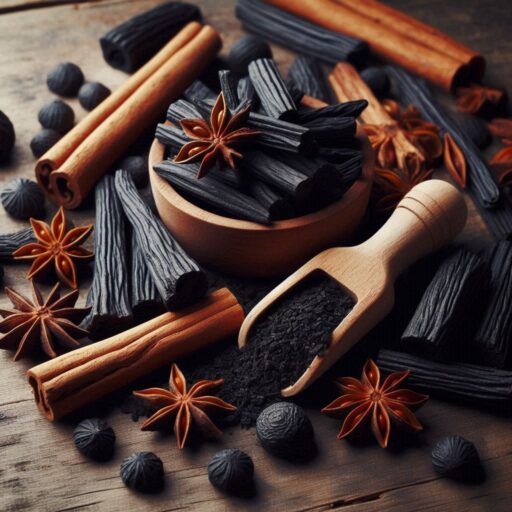
Odour description (decreasing): Sweet, Anise, Warm, Herbal-spice, Liquorice, Mimosa, Aromatic, Herbaceous

Odour description (decreasing): Deep, Sweet, Warm, Honey, Tobacco, Hay, Floral, Wax, Animalic
A selection of powerful and fixative materials in a handy storage container
This product has multiple variants. The options may be chosen on the product page
Odour description (decreasing): Sweet, Warm, Honey, Tobacco, Herbal, Woody, Coumarin, Floral, Fruity, Dried Fruit

Odour description (decreasing): Sandalwood, Creamy, Warm, Sweet, Velvety, Soft. Powerful, Diffusive & Fixative

Odour description (decreasing): Tonka, Warm, Maple, Coumarin, Coconut, Toasted, Nutty, Celery with Whiskey-Like Nuances

Odour description (decreasing): Rich, Warm, Woody, Amber, Tobacco, Honeyed, Herbal, Leathery, Slightly Smoky
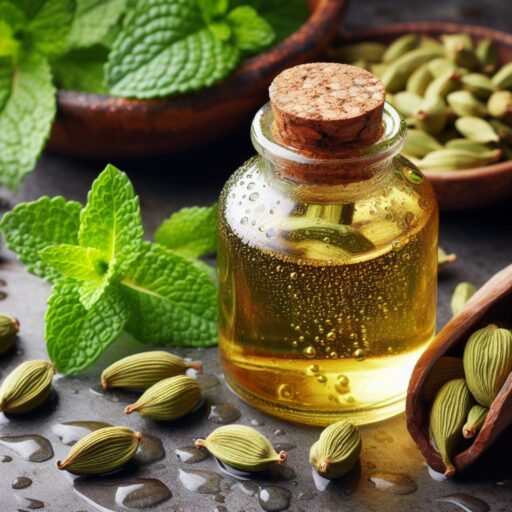
Odour description (decreasing): Characteristic, Cardamom, Warm, Spicy, Camphor, Medicinal, Balsam, Woody

Odour description (decreasing): Spicy-Cinnamon, Sweet, Warm

Odour description (decreasing): Balsamic, Warm, Mineral, Church-Like, Incense

Odour description (decreasing): Musky, Powerful, Warm, Ambrette Seed, Fruity

Odour description (decreasing): Balsamic, Warm, Mineral, Church-Like, Incense



Reviews
There are no reviews yet